A retort pouch is a flexible, multilayer heat-sealable laminate bag engineered to undergo pressurized thermal sterilization at 116–121 °C inside a closed retort vessel. Combining protective polyester, high-barrier aluminum foil or metal oxide coatings, optional nylon reinforcement, and heat-resistant cast polypropylene, it hermetically preserves low-acid foods for more than one year without refrigeration.
How Does a Retort Pouch Work, and What Are Its Main Uses and Trade-Offs?
A retort pouch works like a flexible metal can: food is filled into a pre-converted barrier bag, residual headspace air is exhausted, the top opening is hermetically fusion-sealed, and the sealed pouch is sterilized under counterbalancing pressure inside a retort. That combination kills spoilage and pathogenic microorganisms while blocking oxygen, moisture, and light during ambient storage.
Developed in the 1960s through cooperation among the U.S. Army Natick R&D Command, Reynolds Metals Company, and Continental Flexible Packaging, retortable pouches replace rigid metal cans and glass jars for shelf-stable foods that require commercial sterilization (Kontominas et al., 2021). Under federal thermal-processing definitions, a flexible container is one whose shape or contour is significantly affected by the enclosed product, and its fused heat seals provide the hermetic barrier that blocks post-process microbial entry (USDA FSIS Part 431; U.S. FDA Part 113).
Commercial Uses and Format Variations
Commercial FDA-approved retort pouches are manufactured in flat three-side or four-side seal formats, bottom-gusset stand-up pouches, spout pouches, and zip-lock pouches (Kontominas et al., 2021). Food processors use them widely for ready-to-eat curries, meat and fish entrees, thick sauces, seafood spreads, military Meals Ready-to-Eat (MREs), and spaceflight rations.
For end users, sealed pouches reheat quickly by immersing the pack in boiling water for 3–5 min, or by microwave heating when a non-foil transparent barrier laminate is specified (Kontominas et al., 2021).
Advantages and Operational Trade-Offs vs. Rigid Cans
Retort pouches deliver major logistics and food-quality gains over tin cans and glass jars, yet they impose stricter sealing, retorting, and handling controls on the packaging line.
- Empty container storage and transport savings: Empty retort pouches occupy 85% less warehouse space than empty tin cans, weigh substantially less, require less manufacturing energy, and eliminate external container rust (Kontominas et al., 2021).
- Faster sterilization and better sensory retention: Because the flat pouch profile conducts heat rapidly to the product center, sterilization cycles shorten considerably, preserving nutrients, texture, and flavor while trimming retort energy consumption (Kontominas et al., 2021).
- Mandatory overpressure retorts and tight scheduling: Unlike rigid cans, flexible pouches require pressurized air overpressure during heating and cooling to keep seals from rupturing, and sealed containers face a 2-hour maximum delay before entering the retort unless a processing authority validates an alternative window (USDA FSIS Part 431).
- Mechanical vulnerability and multilayer disposal: Foil-bearing laminates add density and complicate recycling and waste disposal compared with mono-material plastics (Rojas et al., 2023), and wet post-retort pouches require careful conveying so abrasion or impact never compromises hermetic seals (U.S. FDA Part 113).
What Laminate Layers and Barrier Specs Does a Retort Pouch Require?
A standard opaque retort pouch requires either a three-layer laminate of polyethylene terephthalate (PET), aluminum foil, and cast polypropylene (CPP) or a 4-ply laminate adding polyamide (PA) nylon between the foil and sealant layers. Each bonded ply performs a dedicated thermal, mechanical, or gas-barrier task that no single commercial polymer can achieve alone.
Because moisture loss harms food texture and oxygen ingress triggers browning, lipid rancidity, and vitamin loss during long-term ambient storage, converters combine distinct polymer and barrier plies using heat-resistant laminating adhesives (Rojas et al., 2023). A documented commercial 4-ply fish curry pouch (150 × 200 mm, roughly 300 g capacity) pairs 12 μm outer polyester, 9 μm aluminum foil, 15 μm nylon, and 70 μm inner cast polypropylene (Majumdar et al., 2015).
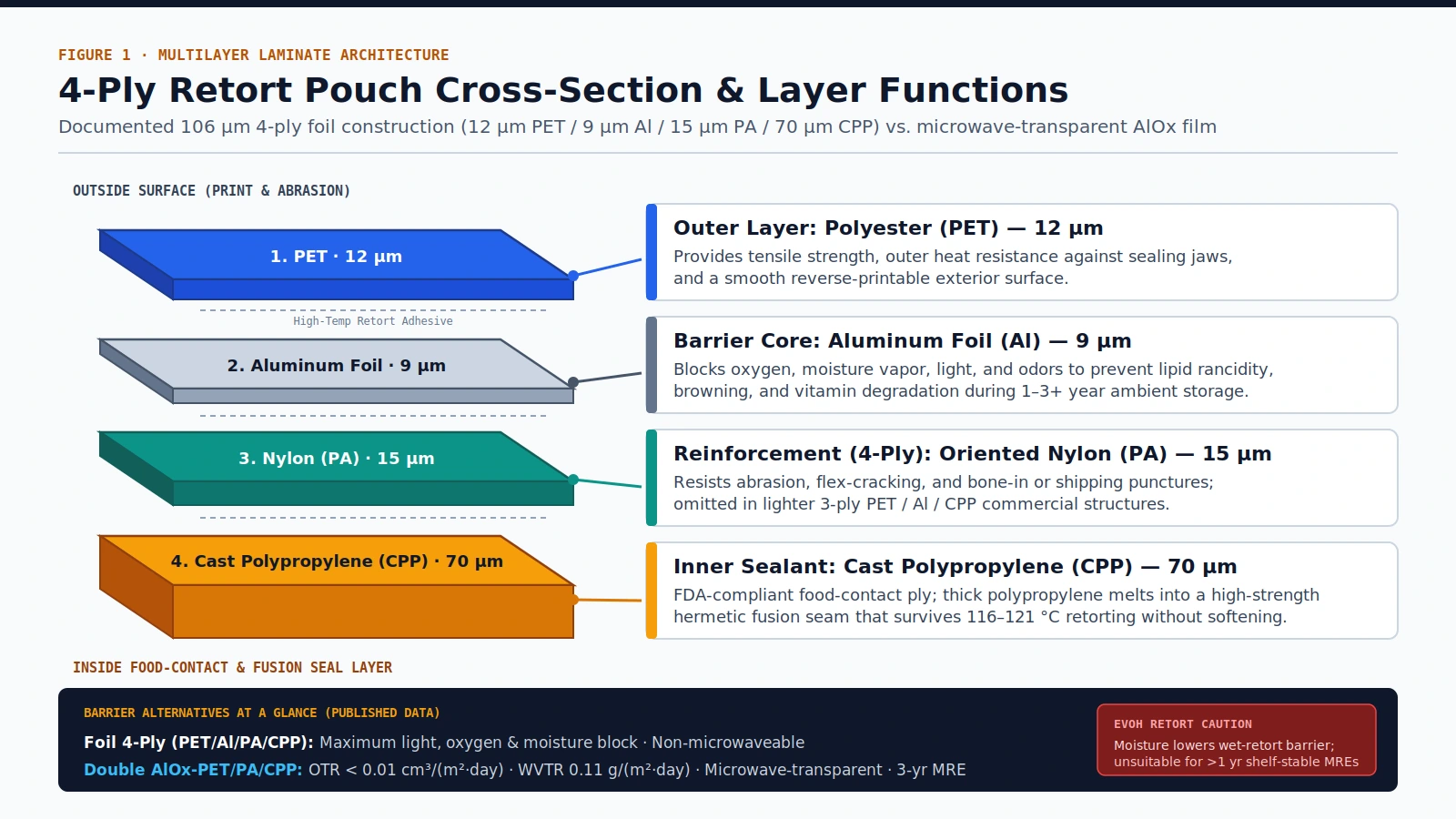
| Laminate Position | Polymer or Barrier Film | Documented Gauge | Primary Functional Role in Retorting |
|---|---|---|---|
| Outer print ply | Polyester (PET) | 12 μm | Mechanical strength, outer heat resistance against seal bars, and reverse-printable surface |
| Core barrier ply | Aluminum foil (Al) | 9 μm | Blocks light, oxygen, moisture vapor, and external odors over multi-year ambient storage |
| Reinforcement ply (4-ply) | Oriented nylon (PA) | 15 μm | Adds abrasion resistance and mechanical toughness against flex-cracking or sharp contents |
| Inner sealant ply | Cast polypropylene (CPP) | 70 μm | Food-contact surface that melts cleanly into strong hermetic fusion seals surviving 116–121 °C |
Foil vs. Microwave-Transparent Barrier Alternatives
When a brand requires microwave-safe reheating or metal-detector compatibility, aluminum foil cannot be used. Converters substitute vapor-deposited aluminum oxide (AlOx) or silicon oxide (SiOx) coatings on PET laminated to oriented nylon 6 and CPP (Rojas et al., 2023).
Not all transparent barriers perform equally under wet steam retorting. Ethylene vinyl alcohol (EVOH) is moisture-sensitive, so its oxygen barrier deteriorates during thermal processing; researchers conclude EVOH pouches are unsuitable for in-package thermostabilized MREs targeting more than one year of shelf life (Rojas et al., 2023). By contrast, double-layer and triple-layer AlOx-coated PET laminates meet or approach the U.S. Army MRE barrier target of 0.06 cc/m²/day oxygen transmission rate (OTR) and 0.01 g/m²/day water vapor transmission rate (WVTR) designed for three years at 25 °C or six months at 37 °C (Rojas et al., 2023). In 8-week salmon trials, AlOx-coated PET/PA/CPP matched aluminum foil pouches in lipid oxidation (TBARS) and sensory scores, whereas SiOx-coated pouches recorded higher oxidation and lower sensory ratings (Kontominas et al., 2021).
| Retort Laminate Architecture | Oxygen Transmission Rate (OTR) | Water Vapor Transmission Rate (WVTR) | Microwave Reheating | Documented Storage Performance |
|---|---|---|---|---|
| 4-Ply Foil (PET / Al / PA / CPP) | Near-zero metal foil barrier | Near-zero metal foil barrier | Not compatible | Standard 1–3+ year shelf stability; matched AlOx in 8-week salmon TBARS |
| Double AlOx-PET / Nylon 6 / CPP | Less than 0.01 cm³/(m²·day) | 0.11 ± 0.02 g/(m²·day) | Compatible | Retains vitamins and sensory quality for at least 3 years at room temperature |
| Triple AlOx-PET / Nylon 6 / CPP | Less than 0.01 cm³/(m²·day) | 0.10 ± 0.003 g/(m²·day) | Compatible | High-barrier polymer architecture suited for extended-duration MRE rations |
| Oriented Nylon 6 / 27% EVOH / CPP | 1.120 ± 0.041 cm³/(m²·day) | 4.120 ± 0.092 g/(m²·day) | Compatible | Moisture sensitivity limits wet-retort thermostabilized shelf life to under 1 year |
What Is Retort Processing and How Does It Achieve Commercial Sterility?
Retort processing is the controlled thermal sterilization of hermetically sealed food containers inside a closed pressure vessel (retort) at temperatures of 116–121.1 °C until the slowest-heating cold spot accumulates sufficient lethality to destroy microorganisms of public health significance. For low-acid foods with finished equilibrium pH above 4.6 and water activity above 0.85, commercial sterilization requires a minimum thermal process established by a competent processing authority.
Low-acid foods (other than alcoholic beverages, and excluding tomato products with finished equilibrium pH below 4.7) support the growth of heat-resistant spores such as Clostridium botulinum if left unsterilized at room temperature (U.S. FDA Part 113). Achieving commercial sterility renders the food free of both public-health pathogens and non-pathogenic spoilage organisms capable of reproducing under nonrefrigerated distribution above 50 °F (10 °C) (USDA FSIS Part 431).
Thermal Lethality Targets and Heat Transfer Speed vs. Rigid Cans
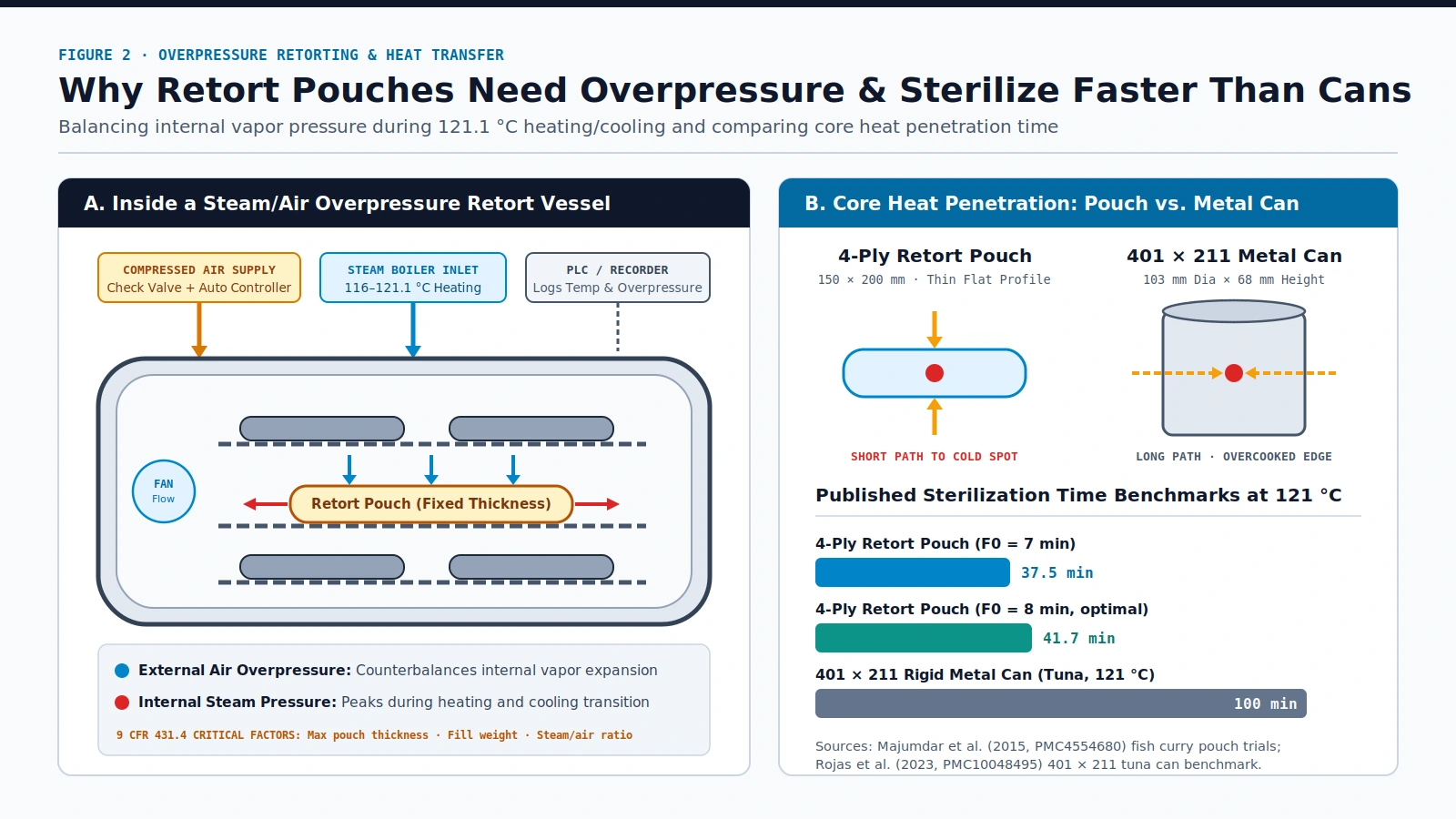
Industrial low-acid thermal processes are designed to achieve a lethality value of F0 greater than 3 min at the container cold spot referenced to 121 °C, which corresponds to at least a 12-log reduction in Clostridium botulinum type A and B spores (Rojas et al., 2023). Commercial meat, fish, and curry recipes frequently run higher target F0 values to eliminate thermophilic spoilage bacteria as well.
Because food matrices conduct heat slowly, container geometry governs how long edges stay overheated while the center catches up. Tuna packed in a rigid 401 × 211 metal can (103 mm diameter by 68 mm height) requires 100 min of steam heating at 121 °C to become shelf-stable (Rojas et al., 2023). By contrast, Rohu fish curry packed in 4-ply 150 × 200 mm retort pouches inside a steam/air overpressure retort at 121.1 °C achieved commercial sterility at F0 values of 7, 8, and 9 min in total process times of 37.50, 41.70, and 44.50 min—with optimal sensory and textural quality at F0 8.14 min and cook value 66.01 min in 41.70 min (Majumdar et al., 2015). Similarly, ready-to-eat crab spread in 4-ply pouches reached optimal sensory scores at 116.1 °C and F0 6 min in 42.59 min (Kontominas et al., 2021).
Overpressure Control, Pre-Seal Air Exhaust, and Critical Process Factors
Flexible laminate seals soften slightly at 121 °C while internal water vapor and any trapped headspace air expand outward. Three process controls prevent pouch swelling, delamination, or burst failures:
- Pre-seal air exhaustion: Federal processing rules require controlled air removal before closing via heat exhausting, mechanical vacuum exhausting, hot brining, or steam injection (U.S. FDA Part 113). In commercial fish curry trials, filled pouches received steam injection for about 10 s immediately before pneumatic heat sealing to displace headspace air (Majumdar et al., 2015).
- Regulated compressed-air overpressure: Steam/air and water-immersion retorts must maintain external overriding air pressure governed by an automatic recording pressure controller, protect air lines with a check valve against water backflow, and prove uniform steam/air circulation via heat-distribution data so cold pockets never form (U.S. FDA Part 113; USDA FSIS Part 431).
- Documented critical factors: For flexible retort pouches, process schedules must measure and control maximum pouch thickness during thermal processing (commonly enforced with perforated constraining trays), maximum fill-in weight, container orientation, product viscosity, pH, salt content, water activity, steam/air ratio, and heating medium flow rate (USDA FSIS Part 431).
How Long Do Retort Pouches Last, and Is Retort Food Safe Without Refrigeration?
Properly sterilized retort pouches remain shelf-stable without refrigeration for more than one year in standard commercial PET/Al/CPP formats and for at least 3 years at ambient temperatures around 23–25 °C in high-barrier foil or AlOx laminates. Retort food is safe to eat without refrigeration because commercial sterilization eliminates viable pathogens inside a hermetic container verified by mandatory seal tests, sanitized cooling, and lot incubation.
Documented shelf-life trials confirm wide ambient durability across product classes: anchovy curry retorted to F0 7 in three-layer PET/Al/CPP achieved a 1-year shelf life stored at 28 °C (Kontominas et al., 2021), while U.S. Army Natick and NASA evaluations confirm that high-barrier foil and AlOx PET 12 μm / OPA 15 μm / CPP 70 μm pouches preserve vitamins and sensory quality for at least 3 years at room temperature (with future space missions targeting three to five years) (Rojas et al., 2023).
Food safety without refrigeration rests on a strict regulatory verification chain rather than packaging materials alone:
- Sanitized cooling water and permanent lot coding: Under FDA section 113.60 controls, container cooling water must be chlorinated or otherwise sanitized with a measurable sanitizer residual at discharge to prevent microscopic post-process recontamination through warm seams, and every pouch must bear a permanent visible identifying code (U.S. FDA Part 113).
- Scheduled visual and physical closure tests: Under USDA FSIS Part 431 rules for flexible containers, trained closure technicians must visually inspect heat seals and entire pouches before and after retorting and perform physical integrity tests at least every 2 hours of continuous production (USDA FSIS Part 431).
- Finished-lot incubation verification: Before shipping, low-acid shelf-stable batches require incubation of normal-appearing sample pouches (at least one container per batch retort load, or one per 1,000 in continuous retorts) at 95 ± 5 °F (35 ± 2.8 °C) for not less than 10 days (240 hours) to verify zero microbial outgrowth (USDA FSIS Part 431). Laboratory commercial sterility testing similarly incubates retorted pouches at 37 °C for 15 d and 55 °C for at least 5 d before anaerobic broth culturing (Majumdar et al., 2015).
What Packaging Machines Fill and Seal Premade Retort Pouches?
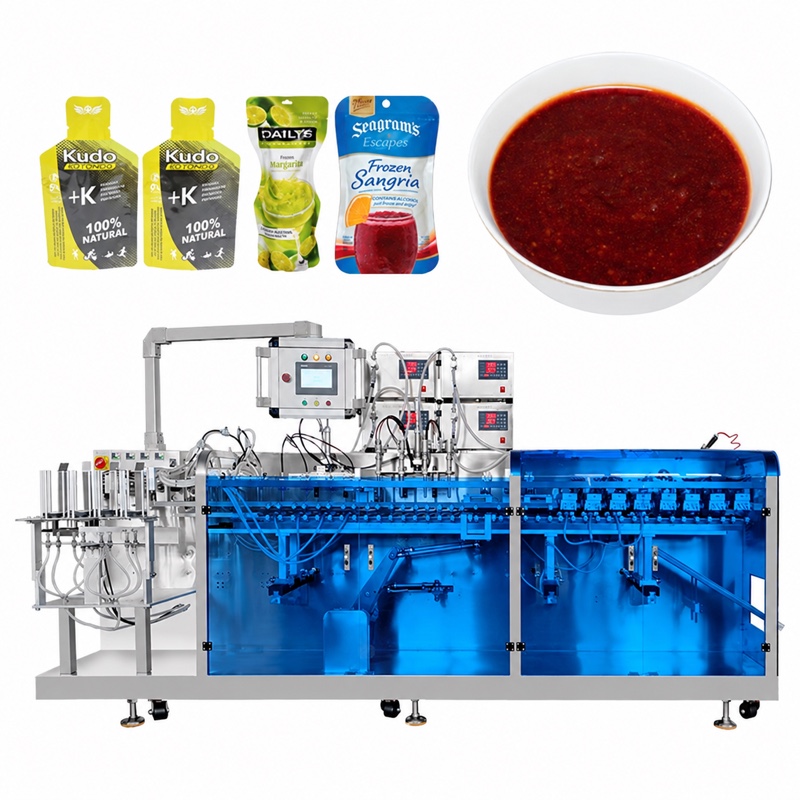
Premade retort pouches are filled and closed on automatic rotary or inline premade pouch filling and sealing machines equipped with sanitary volumetric piston or solid-liquid dosing, anti-drip shut-off nozzles, headspace air exhaust, and PID-controlled multi-stage heat-and-cool sealing jaws. Selecting the right machine prevents the single biggest cause of retort spoilage: food residue or creases trapped inside the top fusion seam.
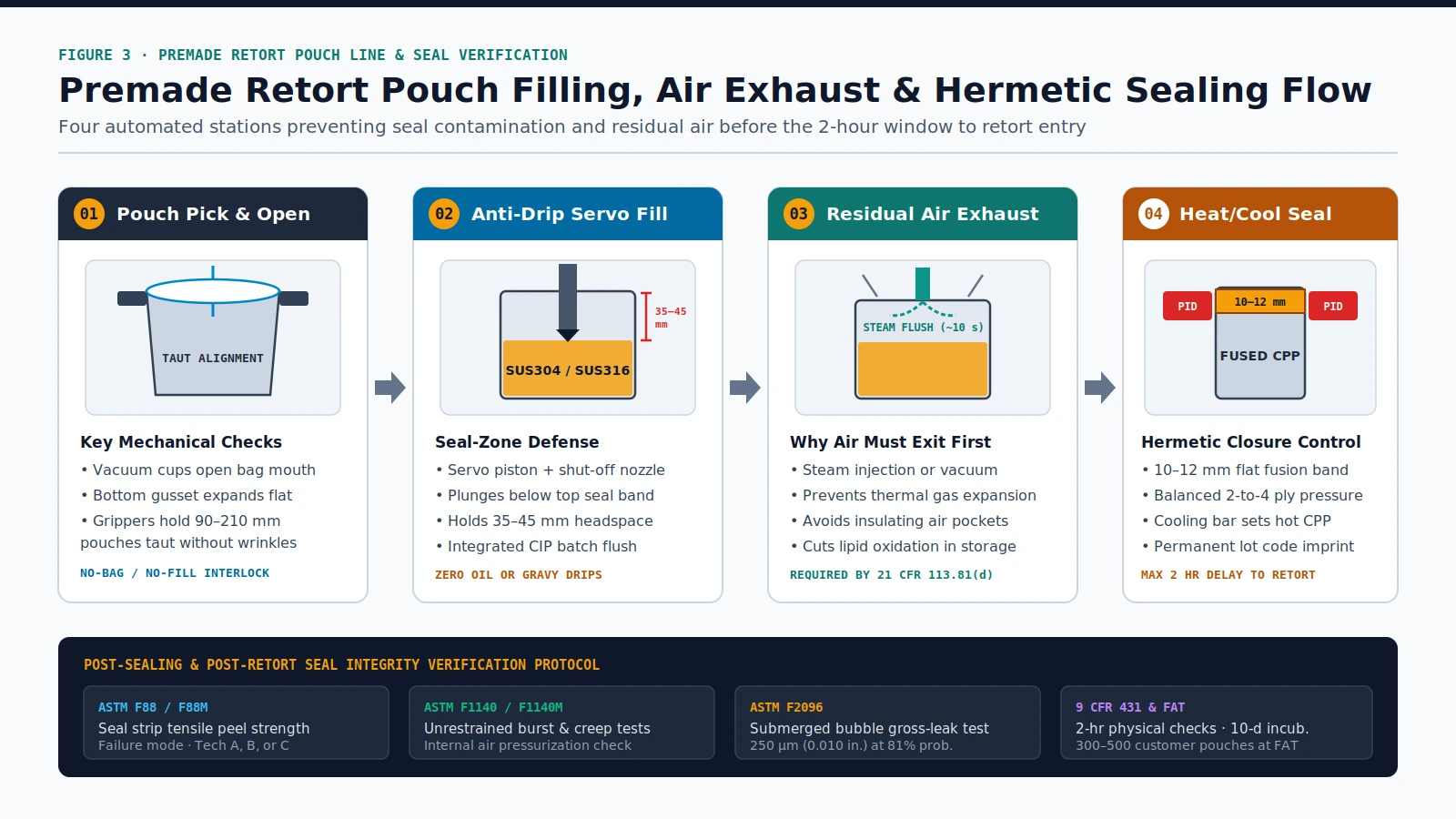
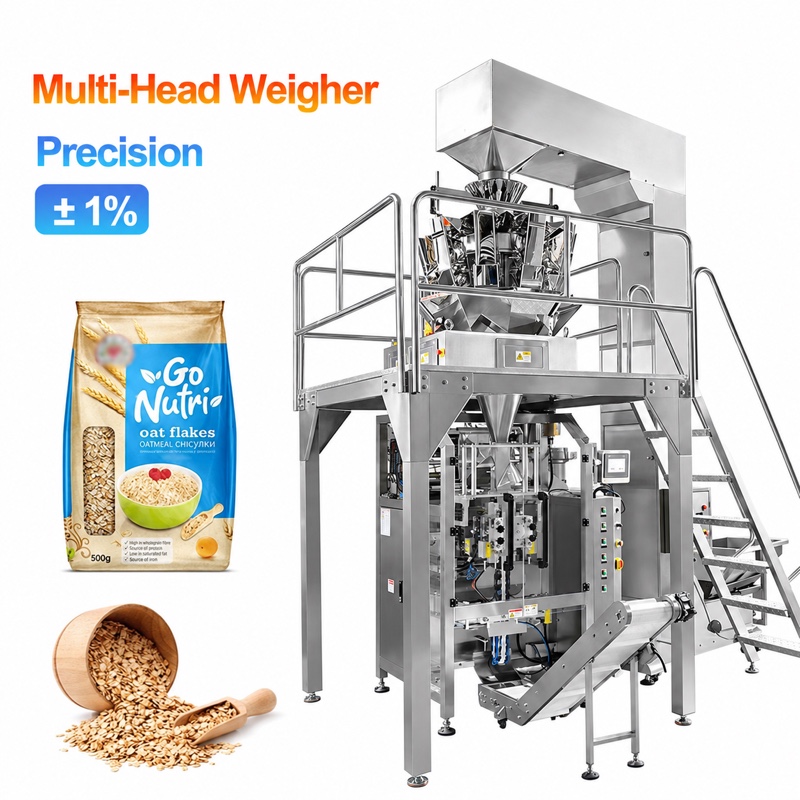
On rotary and inline premade pouch platforms, pre-converted flat three-side or four-side seal bags and stand-up pouches feed from a magazine into stainless mechanical grippers that pull the pouch mouth taut, expand the bottom gusset, dose precise portions below the seal zone, exhaust air, and bond the laminate smoothly. For wet culinary recipes, explore dedicated configurations on powder, liquid, and retort pouch lines and review bag dieline rules in pouch formats and sealing specs.
Seal-Zone Protection, Headspace Clearance, and Wetted Metallurgy
Filling hot gravies, oily curries, or particulate stews into flexible retort bags puts intense demands on dosing hygiene and seal-jaw control:
- Positive anti-drip dosing below the seal band: On the CIP premade pouch sauce machine, a servo-driven volumetric piston pump pairs with a positive anti-drip shut-off nozzle positioned below the 10–12 mm top heat-seal band so oil droplets and sauce strings cannot soil the inner CPP sealant before sealing.
- Unfilled headspace clearance: Liquid and sauce pouch dielines typically reserve 35–45 mm of unfilled headspace so rapid liquid displacement never splashes the seal interface, while heated seal bars press out entrapped vapor and PID temperature stability with balanced jaw pressure prevents micro-channel leaks where side gussets step from two laminate plies to four plies.
- Acid-resistant metallurgy and CIP sanitation: Standard frames use food-grade SUS304 stainless steel, whereas recipes containing vinegar, citrus, chili, or salted brines specify SUS316 wetted cylinders, nozzles, and valves to prevent chloride pitting; integrated Clean-in-Place (CIP) manifolds flush product-contact paths via PLC and touchscreen HMI between batches without manual teardown.
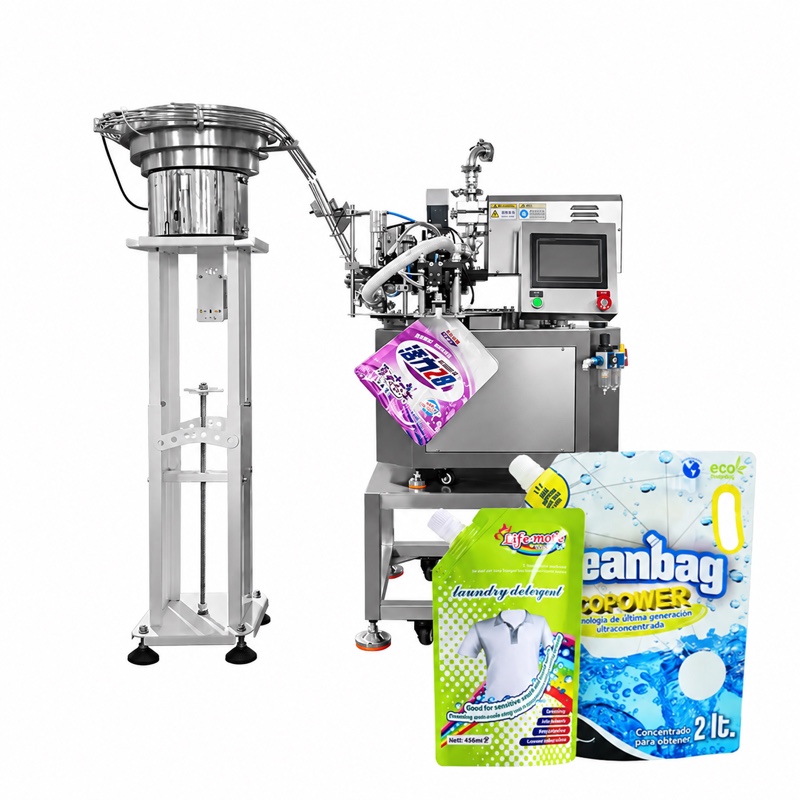
- Equipment envelopes and Factory Acceptance Testing: Across LINEVO premade pouch systems, the LV-210 premade pouch platform handles 90–210 mm wide by 110–330 mm long pre-converted bags at 20–70 bags/min (3.5 kW, 900 kg chassis, 2150 × 1350 × 1300 mm), while larger 2 kg–5 L spouted liquid bags run on the LV-160 spout pouch filler-capper at 10–15 bags/min (3.0 kW, 100 kg). Before export crating, engineers validate magazine pickup, anti-drip cutoff, and leak-free sealing on 300–500 actual customer pouches per SKU as detailed in the premade pouch FAT and seal checklist.
Hermetic Seal Verification Standards (ASTM F88, F1140, and F2096)
Because a microscopic channel leak defeats commercial sterility, quality teams pair routine visual exams with three complementary ASTM flexible-barrier test methods. Notably, ASTM F1140 explicitly notes that internal pressurization failure resistance does not necessarily correlate directly with ASTM F88 strip peel strength, so plants run peel, burst/creep, and leak tests together (ASTM F1140/F1140M).
| Verification Standard or Protocol | Test Principle | Quantitative Benchmark or Control | Defect or Risk Detected |
|---|---|---|---|
| ASTM F88/F88M | Tensile pull on cut seal strip using consistent Technique A, B, or C fixture | Measures maximum and average separation force plus specimen failure mode | Weak fusion bond, cold seal, or adhesive delamination |
| ASTM F1140/F1140M | Internal air pressurization of unrestrained pouch (burst ramp or creep hold) | Pressurizes until failure (burst) or holds set pressure for set duration (creep) | Localized weak points along entire perimeter and gusset transitions |
| ASTM F2096 | Submerged internal pressurization bubble test in water bath | Detects gross leaks down to 250 μm (0.010 in.) with 81% probability | Channel leaks from trapped gravy, wrinkles, or pinholes |
| USDA FSIS Part 431 routine QC | Trained technician visual checks plus post-retort physical closure tests | Visual checks pre- and post-retort; physical tests at least every 2 hours; 10-day incubation at 35 ± 2.8 °C | Closing-machine drift, thermal seal creep, and viable microbial survival |
What Drives the Cost of a Retort Pouch Packaging Setup?
Total capital and operating cost for a retort pouch packaging line is driven by four interdependent engineering choices rather than the bagger chassis alone: multilayer laminate specification, filling and sanitation automation scope, downstream overpressure retort utilities, and regulatory validation overhead.
- Laminate ply count and barrier chemistry: Moving from a standard three-layer PET/Al/CPP pouch to a puncture-resistant 4-ply PET/Al/PA/CPP structure or a microwave-transparent double- or triple-layer AlOx-coated PET laminate adds converter material steps and custom tooling review, directly influencing per-pouch operating expense (Kontominas et al., 2021; Rojas et al., 2023).
- Dosing complexity, metallurgy, and air-exhaust stations: Single-component smooth sauces require fewer stations than dual-stage solid-plus-gravy meals that combine multihead or manual meat dosing with servo volumetric pistons, steam-flush or vacuum air exhaust, SUS316 acid/brine wetted alloys, and automated CIP piping.
- Overpressure retort vessel and plant utilities: Unlike hot-fill or refrigerated pouch lines, true low-acid retorting requires a dedicated overpressure sterilization suite integrating the retort vessel, steam boiler, air compressor, centrifugal recirculation pump, constraining pouch trays, and PLC recording pressure/temperature controls (Majumdar et al., 2015; USDA FSIS Part 431).
- Process validation, FAT testing, and incubation capacity: Launching each new low-acid SKU requires processing-authority heat-penetration studies, 300–500 production pouches for pre-shipment FAT verification, chlorinated cooling water treatment, ASTM F88/F1140/F2096 lab instrumentation, and secured 95 ± 5 °F (35 ± 2.8 °C) incubation room space for mandatory 10-day (240-hour) lot holds (U.S. FDA Part 113; USDA FSIS Part 431).
To scope premade retort pouch filling and sealing equipment around your exact bag width, laminate construction, filling temperature, viscosity, and largest particulate size, submit your pouch dieline and recipe targets through our Project Brief.
Frequently Asked Questions
Can You Microwave Food Directly Inside a Retort Pouch?
Only non-foil transparent retort pouches—such as AlOx-coated or SiOx-coated PET laminated with oriented nylon 6 and CPP—are compatible with microwave reheating (Rojas et al., 2023). Standard foil-bearing PET/Al/CPP and PET/Al/PA/CPP pouches reflect microwave energy and are reheated by immersing the sealed pouch in boiling water for 3–5 min or emptying the contents into a microwave-safe dish (Kontominas et al., 2021).
Why Can Standard Polyethylene Stand-Up Pouches Not Be Used for Retorting?
Standard retail snack pouches use polyethylene inner layers and ambient-grade adhesives that soften, delaminate, or lose seal integrity at 116–121 °C retort sterilization temperatures. Retortable pouches require FDA-approved high-temperature laminates—such as a 70 μm cast polypropylene (CPP) inner fusion layer with retort-grade adhesives—engineered to retain mechanical and barrier strength through pressurized thermal cycles (Kontominas et al., 2021; Majumdar et al., 2015).
What Is the Maximum Allowed Delay Between Pouch Sealing and Retort Sterilization?
Under federal meat and poultry commercial-sterility regulations, the maximum time lapse between closing a filled flexible container and starting thermal processing is 2 hours, unless a processing authority supplies documented data proving that an alternative interval will not allow microbial outgrowth or spoilage (USDA FSIS Part 431).
What Is the Required Inspection Frequency for Flexible Retort Pouch Seals?
Under USDA FSIS Part 431 rules for flexible containers, a trained closure technician must visually examine heat seals and the full pouch before and after thermal processing according to a statistical sampling plan, and perform post-retort physical container-integrity tests at least every 2 hours of continuous production with documented acceptance criteria and corrective actions (USDA FSIS Part 431).
How Does a Retort Pouch Differ From Aseptic Packaging?
In retort pouch processing, food is sealed inside the pouch first and the entire filled container is then sterilized under heat and pressure inside a retort vessel (Kontominas et al., 2021). By contrast, aseptic processing and packaging sterilizes and cools the food separately before filling it into presterilized containers and sealing with presterilized closures inside a microorganism-free atmosphere (U.S. FDA Part 113).
Authoritative Standards and Technical References
- U.S. FDA Part 113 — Thermally Processed Low-Acid Foods Packaged in Hermetically Sealed Containers (eCFR)
- USDA FSIS Part 431 — Thermally Processed, Commercially Sterile Products (eCFR)
- Kontominas et al. (2021) — Recent Developments in Seafood Packaging Technologies: Retort Pouch Processing (Foods, NIH PMC)
- Rojas et al. (2023) — Preserving Ready-to-Eat Meals Using Microwave Technologies for Future Space Programs (Foods, NIH PMC)
- Majumdar et al. (2015) — Optimization of Process Conditions for Rohu Fish in Curry Medium in Retortable Pouches (Journal of Food Science and Technology, NIH PMC)
- ASTM F88/F88M — Standard Test Method for Seal Strength of Flexible Barrier Materials
- ASTM F1140/F1140M — Standard Test Methods for Internal Pressurization Failure Resistance of Unrestrained Packages
- ASTM F2096 — Standard Test Method for Detecting Gross Leaks in Packaging by Internal Pressurization (Bubble Test)
Matching LINEVO Equipment in This Category
Further Reference
Engineering reference for 90–210 mm stand-up doypacks, press-to-close zippers, W-gussets, spout fitments, dust-hood sealing, and CIP anti-drip nozzle clearance.
View Technical Guide →SYSTEM ARCHITECTURE HUB · P05Premade Pouch Packaging Applications: Granules, Dusty Powders, Liquids & SaucesMatch snack granules, coffee beans, oatmeal, pet kibble, dusty spices, and CIP viscous sauces to LINEVO LV-210, LV-160, multihead, auger, and servo-piston fillers.
View Technical Guide →ENGINEERING GUIDE · P16Powder, Viscous Sauce & Liquid Beverage Premade Pouch Packaging LinesEngineer dust-free servo auger spice/protein pouch lines, SUS304/316 CIP-ready premade sauce baggers, LV-210 juice/dairy machines, and LV-160 spout fillers.
View Technical Guide →ENGINEERING GUIDE · P19Premade Pouch Factory Acceptance Test (FAT) & Seal Verification ChecklistEngineering Factory Acceptance Test (FAT) protocol for LINEVO LV-210, CIP sauce, and LV-160 spout pouch machines: zipper opening, fill sigma, and seal burst checks.
View Technical Guide →